
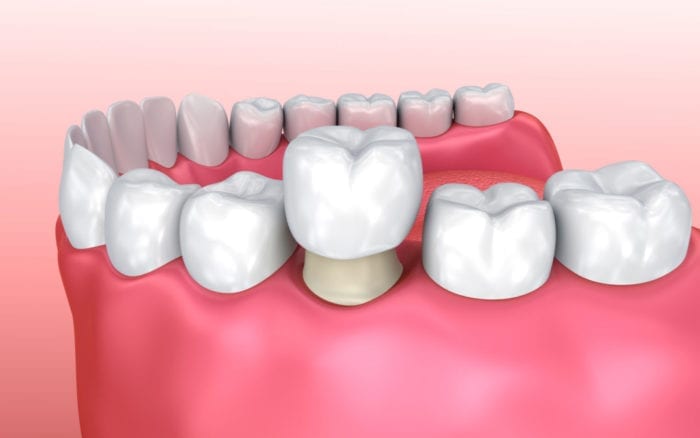
Dental crowns are dental restorations that cover chipped, cracked, fractured, or weakened teeth. Our office typically uses crowns as the final restoration for dental bridges or dentures. They easily provide a natural-looking prosthetic. Seaside Family and Cosmetic Dentistry offers dental crown treatment in Hampstead, NC.
Dr. Lauren Francis and her experienced dental team help patients restore their smiles with crowns for a more stable and healthier bite.
How Are Dental Crowns Used?
We see a dental crown as far more than a simple cap. Crowns are complete, custom-crafted restorations that actively restore your tooth’s health, function, and appearance. Our office designs and place crowns to solve a wide array of dental challenges with a singular goal: to preserve your natural smile.
Cover Teeth after a Filling or Root Canal
One of the most common reasons we recommend a crown is to save a compromised tooth. When a cavity is too large for a traditional filling, a crown steps in to encase the entire visible portion of the tooth. This prevents the decay from spreading and holds the remaining healthy structure together, effectively stopping a fracture in its tracks. It’s often the definitive treatment that allows us to avoid an extraction, keeping your natural tooth root firmly in place for a lifetime of use.
Similarly, a tooth that has undergone a root canal treatment needs a crown to complete its recovery. While the root canal removes the infected inner pulp, it can leave the tooth more brittle. A crown becomes that essential protective shell, shielding the tooth from the intense forces of chewing and preventing it from splitting.
Support Restorations
Beyond repair, crowns are pivotal in replacing missing teeth. They serve as the critical anchors for a traditional dental bridge, capping the healthy teeth on either side of a gap to support a false tooth in between. This creates a stable, functional, and aesthetic solution.
A crown is also the final, visible piece of a dental implant. After the implant post integrates with your jawbone, we attach a custom crown on top. This crown is meticulously crafted to match the color, shape, and translucency of your surrounding teeth, completing your smile as if nothing was ever missing.
Fix Cosmetic Imperfections
We also use crowns for significant cosmetic enhancements. For a tooth that is severely discolored, misshapen, or misaligned, a porcelain crown can create a dramatic and beautiful transformation. It allows us to redesign a tooth’s appearance entirely, ensuring it blends seamlessly with your smile’s overall harmony.
Cover Worn Teeth
For patients who grind their teeth (bruxism), we may place crowns to restore teeth that have been worn down. A durable crown can rebuild teeth to their proper size and shape to improve both your bite and your comfort.
Dental Crown Treatment at Seaside
To begin treatment, Dr. Francis removes a small portion of the tooth structure. This is done to prepare the teeth for the dental crowns. Dr. Francis will then take impressions of the teeth to send to a dental lab. The dental lab will fabricate the crowns according to these specifications.
While the crowns are being created, Dr. Francis will provide you with a temporary tooth cap. In about 2 to 3 weeks, you will return to our office. Dr. Francis will place the crowns on the teeth and make sure they are secure.
If you have an old filling or dental crown, we can replace it for you. Worn, broken, or metal restorations do not blend in with natural teeth and can damage natural surrounding teeth. Receiving new crowns provides stability and security to your teeth and gums.
Dental Crown FAQs
Learn more below with answers to common questions about dental crowns in Hampstead, NC.
How long do dental crowns last?
Typically, dental crowns can last from 15 to 30 years. They depend on how you care for your dental crowns. By cleaning your crowns properly and visiting our office for routine visits, we can ensure that your crowns last as long as possible.
Is the dental crown treatment painful?
We use a local anesthetic to numb the treated area that is receiving the dental crown or crowns. An anesthetic prevents pain during treatment. After their treatments, many patients feel tooth sensitivity and soreness in their gums. However, this will pass with pain medications and time. If you have severe pain after your crown treatment, please contact our office so we can find the problem.
What should I avoid after getting a crown?
For the first 24 hours, you should avoid sticky and hard foods. This is to make sure that the crown doesn’t move or come out while it’s still settling into your mouth. After this period, you should be able to eat and drink anything that you normally would.
If you have sensitivity because of the preparation needed for a crown, try to avoid anything that’s very hot or cold, and chew on the side opposite the crown.
Can teeth underneath a crown get infected?
Ill-fitting dental crowns increase patients’ chances of decay. Plaque can build up underneath the crown, impacting the tooth underneath. If you have an old dental crown that is broken or loose, contact us so we can replace it immediately. Properly fitting crowns should fully cover and protect the tooth.
How long does a dental crown take to settle?
As with any new restoration, your crown will feel a bit weird in your mouth at first. It takes some time for you to adjust. Your crown may feel a bit bulky in your mouth for the first week or two. It should feel more normal to you after this two-week period. If you’re still having issues, call our office so that we can make sure the restoration fits properly.
Is a dental crown the best choice for me?
Dental crowns take care of a lot of dental issues. They’re a great way to preserve natural tooth structure, even with severe damage or decay. We take care to preserve natural tooth structure whenever possible. The dentist takes a full oral evaluation and discusses your budget to determine whether a dental crown is the best choice for you.
How long does it take your gums to heal after a crown?
After a crown placement, the stitches will be ready to be removed after about 7-10 days. The next step is to give the gums a chance to heal, which typically takes about three months. It will take time to adjust to your crown, so patience is key after a crown procedure.
How do you clean under a crown?
Make sure to brush your teeth with a soft toothbrush and floss daily. Fluoride may be used to supplement brushing. Take care when flossing around a crown to prevent breaking.
Contact Our Dental Office to Protect Your Teeth
Call Seaside Family & Cosmetic Dentistry for dental crown treatment in Hampstead, NC, today at 910-335-4392 or schedule a consultation with us on our website. Please let us know if you have any further questions, and we will be glad to help.